
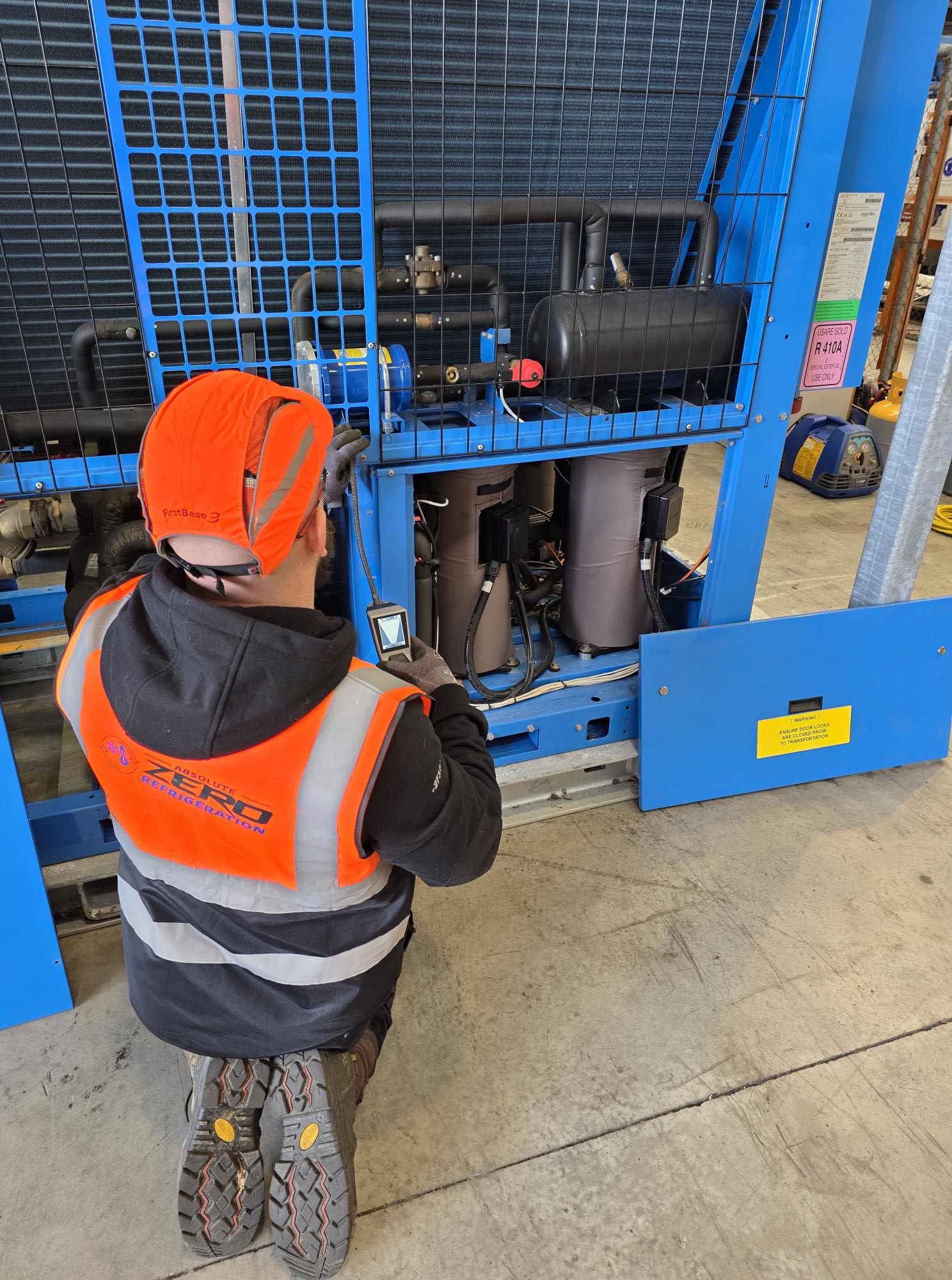
Refrigeration and cold storage systems rarely fail all at once. In our experience, the vast majority of leaks, breakdowns, and unplanned outages start small, a slow weep at a joint, a fitting under vibration stress, or corrosion quietly working its way through a component that's been out of sight for years. Left unchecked, these small issues become expensive ones: lost refrigerant, lost product, compliance headaches, and in the worst cases, unplanned downtime that ripples through an entire operation.
That's why regular leak detection isn't just a compliance checkbox for us, it's one of the most valuable things we do for our customers.
The cost of a missed leak
A refrigerant leak rarely announces itself early. Systems often keep running, sometimes for weeks or months, working harder than they should to compensate for lost charge. That means higher energy use, increased wear on compressors and other components, and a gradually rising risk of a much bigger failure. If temperatures drift as a result, product loss follows, which, in a cold store or food processing environment, can be the most costly outcome of all.
There's also a regulatory dimension. Many refrigerants used in commercial and industrial systems are subject to environmental reporting and leak-rate obligations. Regular, documented leak checks aren't just good practice, they're how operators stay on the right side of those requirements and avoid unnecessary refrigerant loss into the atmosphere.
Why we catch problems before they become failures
Leak detection is most valuable when it's paired with a genuinely thorough inspection regime, not just a scan for refrigerant, but a proper look at the condition of the plant itself. We recently picked up on this during a routine maintenance visit to one of our cold store customers, where our technicians identified heavy corrosion on a refrigeration rack's suction header. It wasn't leaking yet, but it was clearly heading that way. Rather than wait, we flagged it immediately, designed a stainless steel replacement engineered to resist the corrosion that had compromised the original, and had it installed before the issue became an emergency.
That's the outcome regular inspection is designed to produce, problems get found and fixed on our terms, not in the middle of a breakdown at 2am.
What good leak detection looks like
Effective leak detection combines a few things working together, electronic leak detection at joints, valves, and fittings; visual inspection for oil staining, corrosion, and physical damage; and a review of refrigerant charge history to catch any drift that points to a slow, undetected loss. It's also about knowing a system's history. Technicians who service a site regularly build a picture of how that plant behaves over time, which makes it far easier to spot something that's changed since the last visit.
The bigger picture: plant longevity
Leak detection is really one part of a broader approach to keeping plant reliable over the long term. The same mindset that catches a slow leak also catches corrosion, wear, and ageing components before they cause a failure. For our customers, that translates into fewer emergency callouts, lower energy costs, better regulatory compliance, and equipment that simply lasts longer.
Regular maintenance and leak detection aren't the most visible part of what we do, but they're often the difference between a planned, low-cost fix and an unplanned, high-cost failure. It's a big part of why we build long-term maintenance relationships with our customers rather than one-off callouts.